


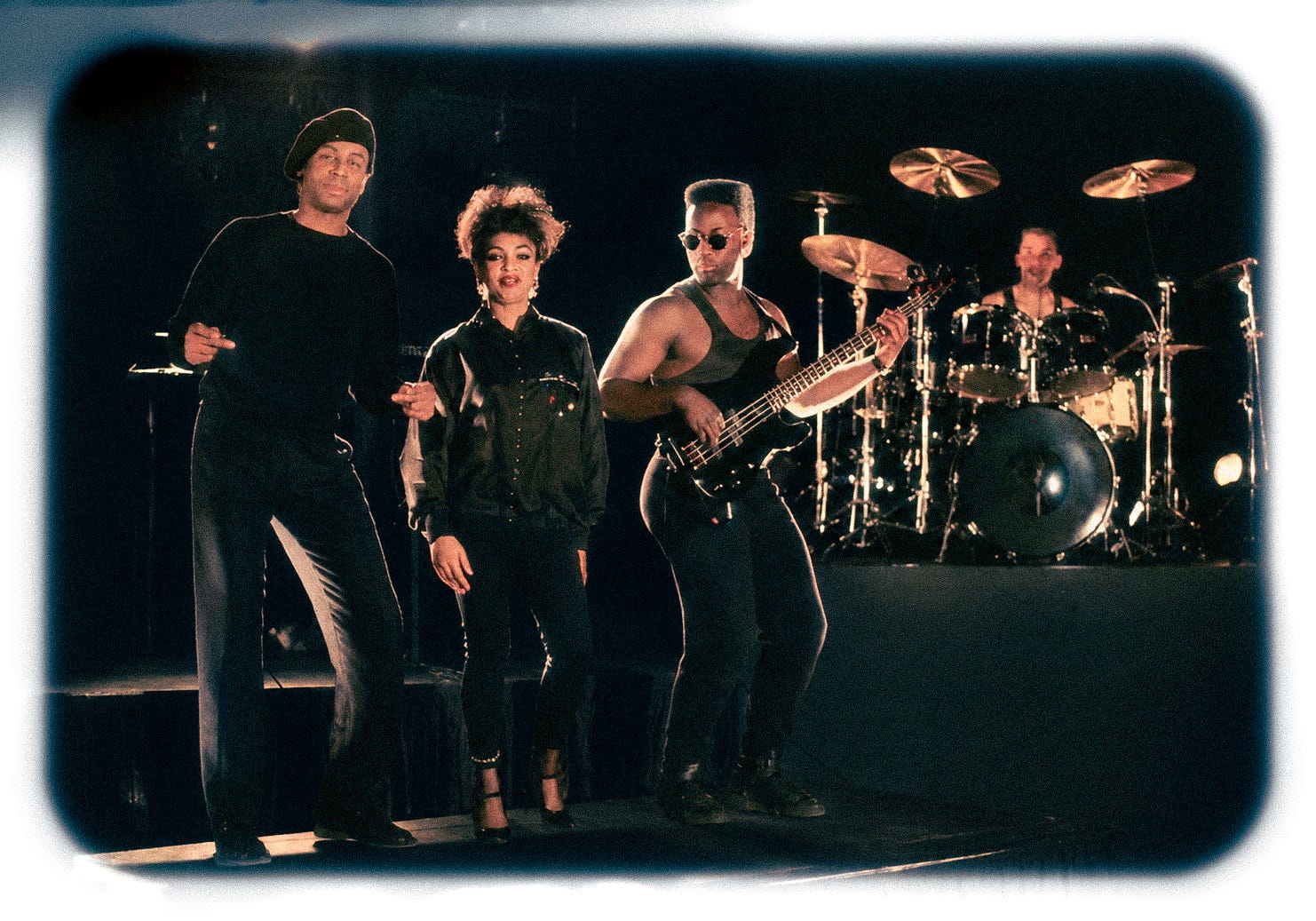
I’ve been fortunate to have more than my fair share of extraordinary bands. These four gifted musicians were in one or more: Vince Ebo (vocals), Clarice Jones (vocals), Darryl C. Anders (bass & vocals), and Bruce Spencer (drums).
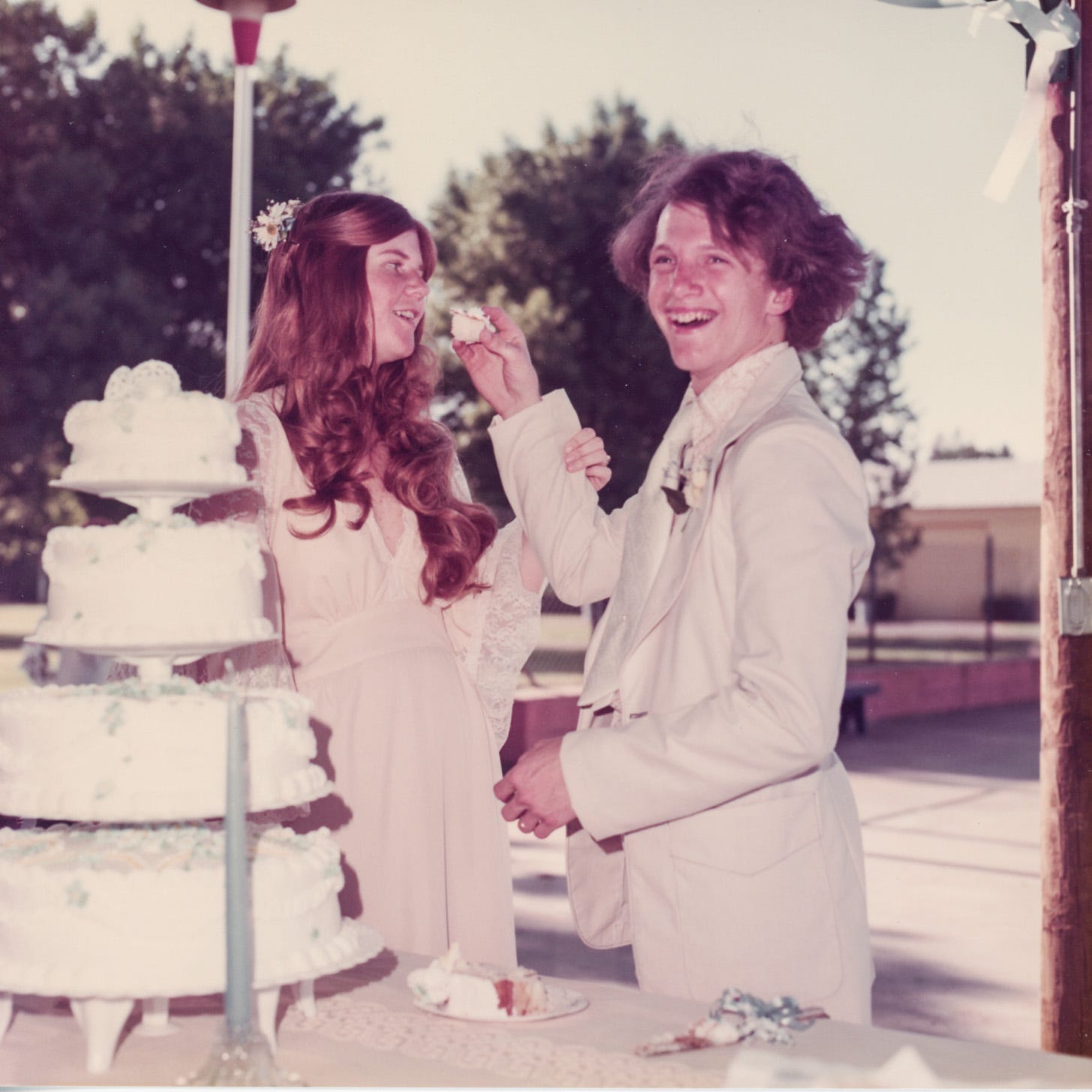
The suit, the bride, the cake, the hair, 1975
I met Vince when I was 18. He was working at a contemporary clothing boutique on Watt Avenue in Sacramento called Bluebeard’s. Retail-wise, it was perfectly positioned a few doors down from Tower Records.
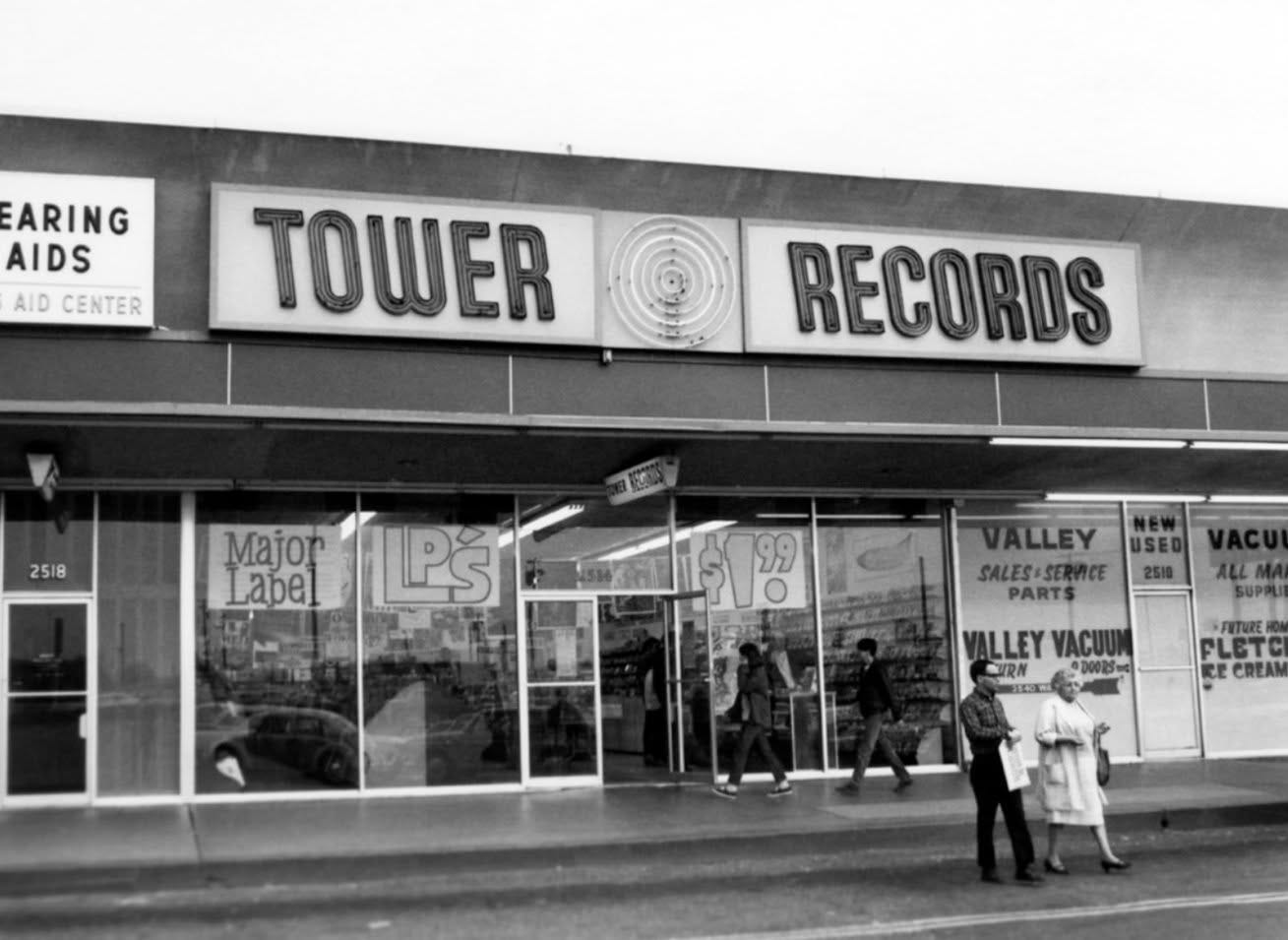
Tower Records Watt Avenue, Sacramento, CA 1970s
I was shopping for a hip suit to get married in—something to complement Andi’s gorgeous dress. Vince was a tall, handsome man of obvious style. He helped me pick out a cream-colored suit and shirt to match my cocoa Earth shoes. I had no idea Vince was a singer until we moved to Sacramento a year or so later. Twelve years passed, and we were in a trio together with Jimmy Abegg, touring the US and Europe. Before the trio, though, there was this particular band, which included John Weber (keyboards), Jimmy Abegg (guitar), and Jon Skinner (tenor saxophone). We were ridiculously well-rehearsed and tighter than a gnat’s ass buzzin’ James Brown’s band.
In that twelve-year gap, Vince was closely associated with the legendary keyboardist and a great friend to me, Roger Smith. Together or apart, they always had something on the hook: pending record deals, house band on Soul Train, backing up some star, session work, packing clubs and blowin’ minds in bands like East Wind, Sun Bear, and Thunder Wonder. Or was it Thunda Wunda?
In my very early twenties, it appeared that they were in a different, more elevated league than me. Might have been that sleek Porsche that Roger was cruisin’ ’round flat Sac in. I had next to no style, let alone a sick ride. It was just me, Andi, a Fender Rhodes piano, and the constant wonderment of how we were going to pay rent.
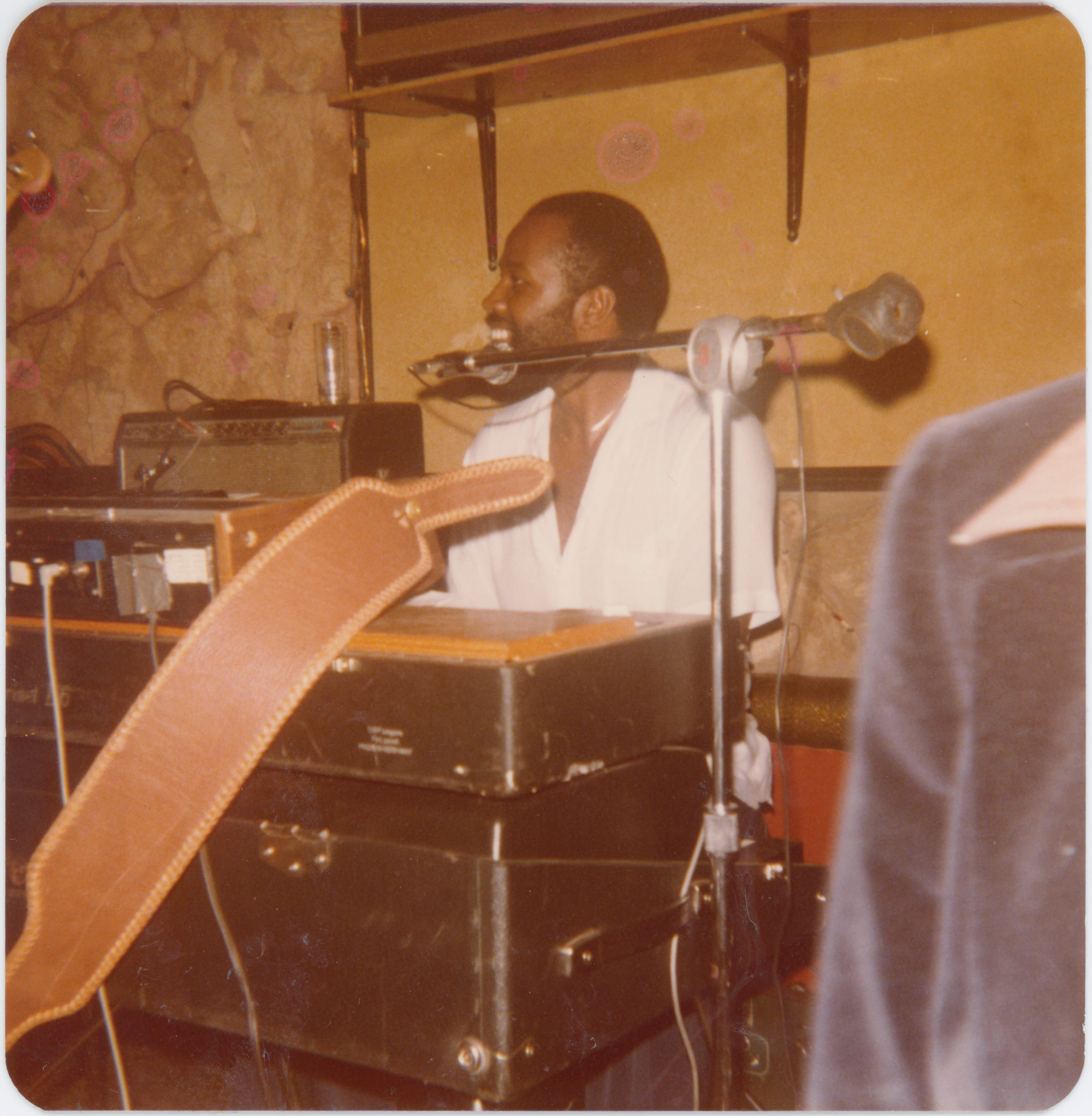
Roger Smith, club-life, purveyor of the Funk
Fast forward a few years and, thankfully, we were paying the rent and more. I heard through the grapevine that Vince wasn’t doing well, though. He was living in San Francisco, not working, depressed, in trouble with the law—there were rumors, musician scuttlebutt.
I reached out to him.
Join the Band, Brother!
I suppose I invented a gig for him. “Hey man, we’re playing at XYZ next weekend. Why don’t you come up to Sac, make a rehearsal, and we’ll hit it for a couple nights—check it out—see if it clicks.” He’d known Clarice Jones for years. Clarice and Shelley Burns had been recording and playing live with me off and on between 1985–87. So, the idea wasn’t a stretch. He was excited to get a call, caught a Greyhound bus, showed up, and, to quote Vince, “Tore it up.” Indeed.
Music-wise, we clicked. We both knew the canon of vocal styles—from the early Marvin Gaye and Smokey Robinson records up through the latest Prince hits. I had already been leaning the band in the direction of more soul and R&B influences. Vince and I had a perfect blend, and he made me a better singer. I don’t recall ever rehearsing anything except to get a lyric right. As for making the music, we improvised in the same language. And that was enough—more than enough.
Vince was not easy, though. His highs were stratospheric. His lows, like digging in Sheol’s dumpsite. I credit the Creator, the overseer of all wounded, for giving me a dispensation of patience I otherwise would not have had. I truly possessed a love for Vinnie, and he for me.
I recall an emergency band meeting (absent Vince) where one or more bandmates insisted he had to go—now. I insisted back. “No, he stays.” And he outstayed the others (for no reason other than being great and Jimmy and I needing a change—and I had a suspicion that a move to Nashville was in the making).
The Trio, or How to Create Something Like Nothing Else Without Trying
What began as a few gigs with me, Jimmy, Michael Roe, and Vince became the trio of Jimmy, Vince, and me. It was a new kind of magic—one people didn’t know they needed—and honestly, we didn’t know we had it to give. Not until we made it—got out on the road and did it. Then it was as clear as a harvest moon.
Between the trio and band gigs, Vince was with me from 1987 into 1992, plus a few later dates. In August of ’91, he signed a record deal with Warner Alliance, got his own manager, and prepared for the stratosphere. It never arrived. Just the regular slog of the music business with only enough highs to keep you in the game. He made a fine solo record titled Love Is the Better Way.
Love Life
Sadly, this was the beginning of the end for the trio. Jimmy took to Nashville well, and it embraced him with open arms. Like Vince, he had new opportunities, too. Our last hurrah, all together, was Love Life: Jimmy, Aaron Smith (drums), Roger Smith (keyboards), Tommy Sims (bass), and Vince. Lots of wonderful guests too. We toured America and Europe with Scott Denté taking the now-vacated guitar spot.
Isolated track of CP, Vince Ebo, Kim Fleming, and Vicki Hampton Vocals on “KISS ME LIKE A WOMAN” — Tommy Sims (bass), Aaron Smith (drums), Roger Smith (clavinet)
Isolated track of Aaron Smith (drums) + Roger Smith (clavinet) on “KISS ME LIKE A WOMAN” — zoo-dirt funky
I think the last gig Vince and I played together might have been headlining the Cornerstone Festival on July 3, 1993.
By December 15 of the same year, Vince was dead from a self-inflicted gunshot.
All of us were gutted. He left a note for me. As more information came out, it was clear he had tried before. I still can’t believe the amount of time I spent with Vince and didn’t discern this possibility. I had all manner of thoughts about his particular quirks and behaviors. I just never saw the ending. The final frame.
Running Into the Wires
The band (including Vince) was playing a gig in Poland in 1990 near where the most infamous of WWII prison camps were located. I recalled the visit to the camps in Roots & Rhythm: A Life in Music:
“At Birkenau, a guide pointed out the high-voltage electric fence surrounding the camp. It was constructed, he explained, to prevent the escape of prisoners, yet prisoners routinely used it as a means of final escape. When a prisoner reached the breaking point of despair and hopelessness, he’d run to the perimeter and throw himself upon the wires. People thought of the method as ‘escape’ and never used the word suicide. They just called it ‘running into the wires.’
“My friend and longtime vocalist Vince Ebo, present on this particular trip, ran into the wires in 1993. I still don’t know for sure what it was that made him despair unto death. I don’t know about final escape with respect to a Jewish man or woman imprisoned at Birkenau. That’s a reaction to a category of evil that is impossible to imagine. That is also true of suicidal motivation as a whole: it’s hard to inhabit the space of that heavy a despair. It’s a horrifying mystery for both the people who suffered atrocities at Birkenau and for Vince. From my experience with Vince, a close friend and collaborator, I know that suicide is the rocket that launches a stream of unending question marks out into the universe and beyond. It mucks up the peace and makes you stare without seeing.”
I Am Convinced
Yet, I do see you, Vinnie, today. I see every good, righteous moment and hear every well-sung, soulful note. And I will always remember you standing next to me on stage that night in Ohio, telling me, “I’m here because I believe.” I knew what you meant. I still hold that same trust and belief. And if it is trustworthy, then so is this: “For I am convinced that neither death nor life, neither angels nor demons, neither the present nor the future, nor any powers, neither height nor depth, nor anything else in all creation, will be able to separate us from the love of God that is in Christ Jesus our Lord (Romans 8:38-39).”
Until we meet again, remember, “We tore it up!”
I know this must have been hard to write. I was with you all at Front Row in Ft Worth, as I’ve shared before.
I remember Vince. And completely shocked when he passed.